
Why Chicago Winters Are So Hard on Garage Door Springs
If you live in a Chicago bungalow, two-flat, or West Loop townhome, your garage door springs work overtime every single day. The city's dramatic freeze-thaw cycles cause metal springs to expand and contract repeatedly, fatiguing the steel far faster than in milder climates. Add in the fact that most Chicago garages are accessed multiple times daily—often through a rear alley—and it's easy to see why spring failure is one of the most common service calls we receive at Charles & Sons Garage Door Service.
The good news: springs rarely fail without warning. Here are the five signs every Chicago homeowner should watch for.
1. Your Door Struggles to Open or Stops a Few Inches Off the Ground
A properly balanced garage door should glide open with minimal resistance. If your opener strains noticeably, the door hesitates mid-travel, or it opens only a few inches before the opener stops and reverses, a weakening spring is usually the culprit. The opener's built-in overload protection is detecting excess resistance and shutting down to protect the motor.
Don't ignore this symptom and keep forcing the door open—a fatigued spring under load can snap suddenly, causing serious injury or damage to the opener. If you notice sluggish travel, schedule a garage door spring replacement inspection right away.
2. You Heard a Loud Bang from Inside the Garage
Homeowners in neighborhoods like Pilsen and Bridgeport often describe a sudden loud bang—like a firecracker or a gunshot—coming from the garage. In most cases, that's the sound of a torsion spring snapping under tension. After the snap, the door typically becomes extremely heavy and either won't open at all or opens crookedly.
If you've heard this sound, do not attempt to operate the door manually or with the opener until a technician has inspected it. The released tension from a broken spring can send hardware flying at dangerous speed.
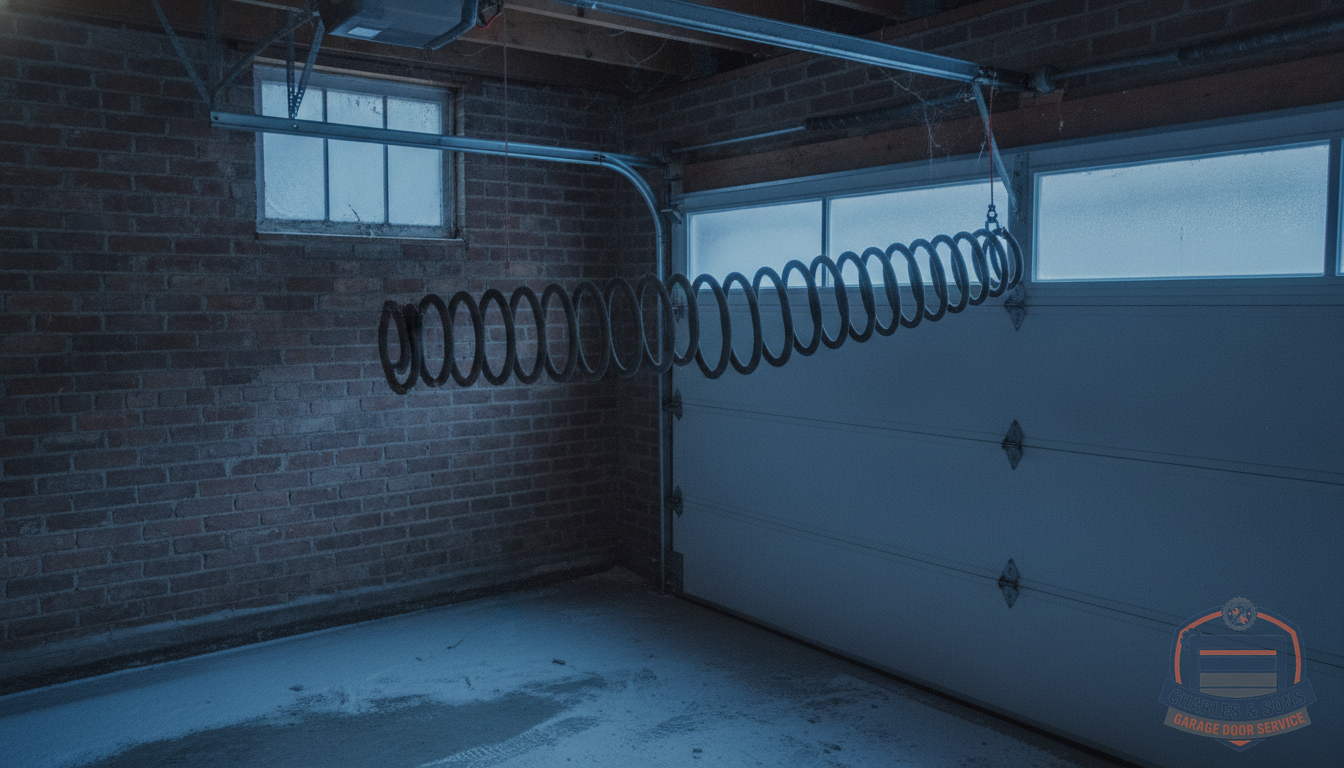
3. You Can See a Visible Gap in the Torsion Spring Coil
Take a moment to look at the horizontal steel shaft above your garage door. If you see a gap—a section where the spring coil is clearly separated—that spring has already broken. This is the most definitive visual indicator, and it means the door is being supported entirely by the remaining spring (if you have a two-spring system) or by nothing at all.
Many Chicago-area homes, particularly older bungalows in Bronzeville and Wicker Park, were originally fitted with single-spring setups. A single broken spring renders the door completely inoperable and should be addressed the same day.
4. The Door Looks Uneven or Tilted When Opening
When one spring in a two-spring system fails before the other, the door loses balanced tension on that side. The result is a door that tilts noticeably as it travels—one corner rising faster or higher than the other. This uneven movement puts severe stress on the cables, drums, and tracks, and can quickly turn a spring problem into a much more expensive cable repair or track alignment job.
If your door looks lopsided in motion, stop using it and call for service. Catching the issue at the spring stage is almost always the most cost-effective outcome.
5. The Door Is Unusually Heavy to Lift Manually
A healthy, properly balanced garage door should feel nearly weightless when you lift it by hand after pulling the emergency release cord. If yours feels like it weighs hundreds of pounds, the springs are no longer doing their job—either because they're broken, have lost tension, or are badly worn. This is particularly common in older homes throughout Lincoln Park and Wrigleyville where original springs may never have been replaced.
Testing the manual balance is a quick check anyone can do safely: disengage the opener, lift the door to about waist height, and let go. It should stay in place with minimal drift. If it falls or feels very heavy, the spring tension is insufficient.
What to Do When You Spot These Signs
The moment you notice any of these warning signs, the safest course of action is to stop using the door and contact a professional. DIY spring replacement is genuinely dangerous—torsion springs store enormous mechanical energy and require specialized winding bars and safety training to handle correctly.
- Stop operating the door with the opener or manually until inspected.
- Do not attempt to wind, unwind, or replace springs yourself.
- Schedule service promptly—operating a door with a compromised spring accelerates wear on cables, drums, and the opener motor.
- Ask your technician to inspect cable drums and bearing plates at the same visit to rule out related wear.
At Charles & Sons Garage Door Service, our technicians service all Chicago neighborhoods—from Pilsen to Wrigleyville—Monday through Sunday, 8:00 AM to 6:00 PM. We stock torsion and extension springs for every door size and re-tension, balance, and safety-test every door before we leave.
Ready to schedule? Call us at +1 (872) 204-0162 or email [email protected]. You can also learn more about our full garage door spring replacement service or add a seasonal tune-up to your visit for complete peace of mind.
Discuss This With Our Team
Call +18722040162 or fill out our online form for a free, no-obligation quote.
Request Free Quote