Why Opener Choice Matters in Chicago
Chicago homes come in every configuration—vintage greystones in Wicker Park, classic brick bungalows in Bridgeport, renovated two-flats in Bronzeville, and sleek modern townhomes throughout the West Loop. Each of these home types has different garage structures, insulation levels, and daily usage patterns that influence which opener will serve you best.
At Charles & Sons Garage Door Service, we help Chicago homeowners navigate the choices every day. Here's an honest breakdown of the three most popular opener types—and the situations each one is best suited for.
Chain-Drive Openers: Reliable, Affordable, and Loud
Chain-drive openers use a metal chain to pull or push the trolley along the rail, much like a bicycle drivetrain. They've been the industry standard for decades and remain the most affordable option on the market.
- Best for: Detached garages, garages separated from living spaces, homeowners on a tight budget.
- Pros: Low upfront cost, extremely durable, widely available replacement parts, handles heavy doors well.
- Cons: Noticeably louder than belt-drive models—the chain vibration transmits through the rail and can rattle walls in attached garages.
For a detached alley garage in Pilsen or Bridgeport, a chain-drive opener is a perfectly sensible, cost-effective choice. Where noise is a concern—such as a garage directly beneath a bedroom—we typically recommend stepping up to a belt-drive unit.
Belt-Drive Openers: Quiet, Smooth, and Ideal for Attached Garages
Belt-drive openers replace the metal chain with a reinforced rubber or fiberglass belt, dramatically reducing vibration and noise. The difference is immediately noticeable—a belt-drive unit operates with a low hum rather than a rattling clank.
- Best for: Attached garages, garages beneath or adjacent to bedrooms, light-sleeper households.
- Pros: Much quieter than chain-drive, smooth operation, less vibration transmitted to the home structure, low maintenance.
- Cons: Higher upfront cost than chain-drive; the belt can stretch over time in extreme temperature swings, though modern reinforced belts handle Chicago winters well.
Homeowners in Lincoln Park and Wrigleyville—where attached garages are common in renovated row houses—consistently prefer belt-drive models for the noise reduction alone. If you're replacing an older chain-drive unit, upgrading to a belt-drive opener is one of the most quality-of-life improvements you can make.
Smart Openers: Connectivity, Security, and Modern Convenience
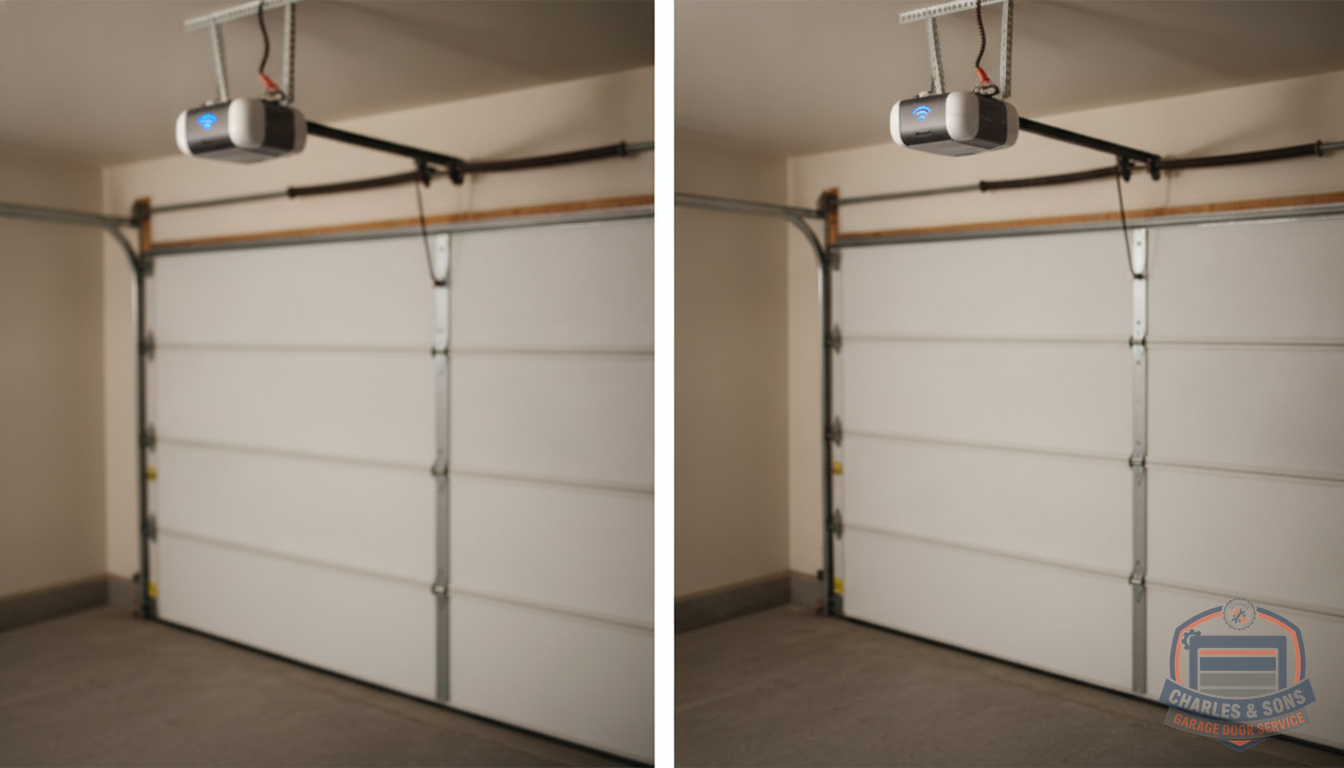
Smart garage door openers include built-in Wi-Fi and integrate with smartphone apps, voice assistants like Amazon Alexa and Google Home, and broader home-automation platforms. Top brands like LiftMaster and Chamberlain offer robust smart platforms with real-time alerts, open/close history logs, and remote access from anywhere.
- Best for: Tech-forward households, frequent travelers, homeowners who want to monitor garage access for deliveries or family members.
- Pros: Remote open/close from any location, instant alerts if the door is left open, integration with smart home systems, package delivery access without sharing physical keys.
- Cons: Depends on a reliable home Wi-Fi connection; higher upfront cost; some setup complexity if integrating with existing home-automation systems.
Smart openers are increasingly popular throughout Chicago's denser neighborhoods—particularly in Wicker Park and Lincoln Park—where homeowners juggle busy schedules and value the ability to verify garage security remotely. Our technicians can walk you through setup and integrate your new opener with existing smart home devices at the time of installation.
Horsepower: Don't Overlook This Critical Spec
Regardless of drive type, choosing the right motor size for your door is essential. A motor that's underpowered for a heavy two-car door will wear out prematurely and struggle in cold weather when lubricants thicken.
- 1/2 HP: Suitable for standard single-car doors made of steel or aluminum.
- 3/4 HP: Recommended for double-car doors, heavy wood doors, or insulated steel doors common in Chicago's older homes.
- 1+ HP: Commercial applications or extremely heavy custom doors.
When we perform a garage door opener installation, we always weigh the door and account for its material and insulation before recommending a motor size. Undersizing is one of the most common and avoidable installation mistakes.
Signs It's Time to Replace Your Current Opener
If your opener is more than ten to fifteen years old, you're likely missing out on safety features and efficiency improvements that are now standard. Signs it's time to replace rather than repair include:
- No auto-reverse safety function (required by UL 325 standards).
- No rolling-code technology (older fixed-code openers are a security vulnerability).
- Frequent logic board failures or grinding noises that recur after repairs.
- Incompatibility with modern remotes or smart home systems.
If your opener is still relatively new but malfunctioning, our opener repair service covers logic boards, drive gears, safety sensors, and remotes—most jobs completed in a single visit. We also recommend pairing any opener service with a full garage door tune-up to make sure the mechanical system the opener is driving is in equally good shape.
Schedule Your Opener Installation or Repair Today
Charles & Sons Garage Door Service serves all Chicago neighborhoods—from Pilsen and Bridgeport to Lincoln Park and Wrigleyville—seven days a week, 8:00 AM to 6:00 PM. Call us at +1 (872) 204-0162 or email [email protected] to discuss your options and get a clear, upfront quote.
Discuss This With Our Team
Call +18722040162 or fill out our online form for a free, no-obligation quote.
Request Free Quote